
🏗 The Ground Truth: What Matteson, IL Homeowners Need to Know About Foundations & Clay Soil
Living in Matteson, IL means dealing with expansive clay soil that can threaten your home's structural integrity. From stair-step cracks to sticking doors, learn the top 5 warning signs of foundation failure. Whether you own a pre-1970s home or new construction, Lateef Home Inspection Services reveals the 'Ground Truth' about maintaining your investment in Will and Cook Counties.
Hello ,
from the Lateef Home Inspection Services team! We are your local experts right here near Matteson, IL, and we know that buying, selling, or simply maintaining a home is one of the biggest investments you'll ever make. The most important part of that investment? The ground it stands on.
Living in the Chicago Metro area, and specifically in our part of Will and Cook Counties, means dealing with a unique challenge that homeowners in other parts of the country rarely face: expansive clay soil.
This blog post is designed to be a friendly, informative, and clear guide to help you understand the beautiful, yet sometimes troublesome, soil beneath your Matteson home and what it means for your foundation. Don't worry, we're here to give you the facts, the tips, and the reassurance you need!
🔎 Why Matteson’s Soil is the Real Star of the Show
The key to understanding foundation settlement in the Matteson area is understanding the geology of the region.
The Clay Factor
The vast majority of the Chicago area, including Matteson, is underlain by soil that is predominantly clay-rich. Clay soil is excellent when it's dry and stable, offering good support for foundations.
However, it has one major characteristic that causes headaches for homeowners: plasticity.
Clay soil is highly susceptible to changes in moisture.
• When it gets wet (rain, melting snow): Clay absorbs water like a sponge, causing it to swell and expand significantly. This expansion can exert immense pressure (called hydrostatic pressure) on your foundation walls, which can lead to inward bowing or cracking.
• When it dries out (drought, high summer heat): The clay soil contracts and shrinks. This shrinkage can literally pull away from the foundation, leaving voids or gaps that reduce support and lead to settlement.
This constant cycle of swelling and shrinking, expanding and contracting, is the primary driver of foundation stress in our region.
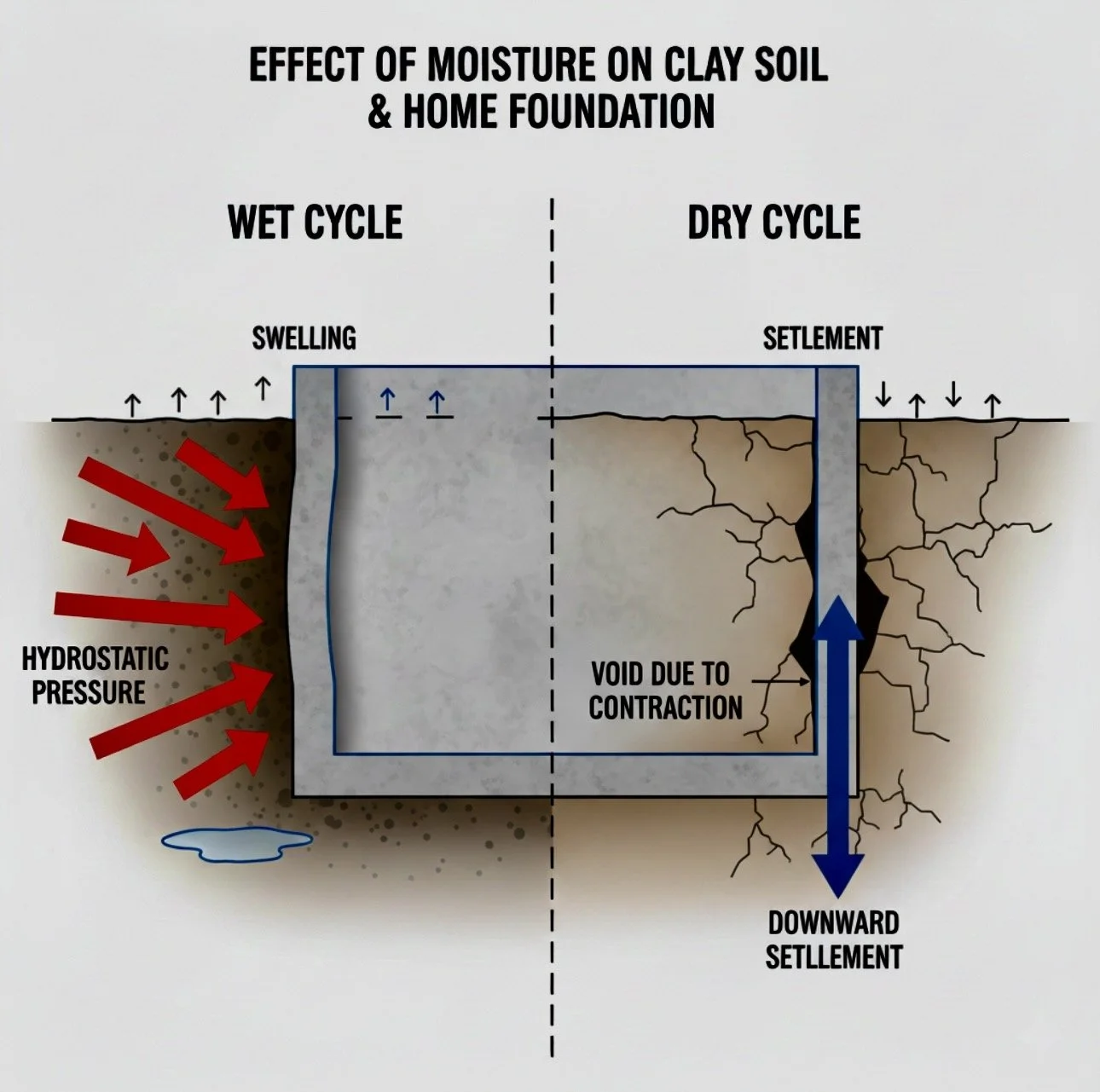
The "Swell and Shrink" Cycle: How local clay soil creates hydrostatic pressure during wet months and dangerous settlement voids during dry months.
🏡 The Age-Old Question: How Old is Your Home?The age of your Matteson home often plays a role in how susceptible it is to soil-related issues.
This isn't about one era being "bad", but about different construction standards and materials used over time.
Homes Built Pre-1970s (Older Housing Stock)
Older homes in the area may have foundations that were built using materials or methods that are less common today, such as stone or brick foundations.
• Potential Challenges: These older foundations may be prone to mortar decay over time. Furthermore, the construction may not have always been built to the depth standards common today, which require foundations to be below the 42-inch frost line to minimize seasonal shifting. If your home has a shallower foundation, it may have a higher probability of settling and sinking over time.
• What to Look For: In older homes, we often see more extensive water seepage and foundation erosion due to aging infrastructure and initial waterproofing that may have deteriorated.
Homes Built Post-1970s (Newer Construction)
While newer homes benefit from modern building codes and materials, they are not immune to settlement.
• Potential Challenges: The primary issue here often relates to soil compaction during the construction phase. If the soil (especially fill soil used to grade the lot) wasn't properly compacted before the foundation was poured, the home might experience uneven or differential settlement as the soil naturally consolidates over time. This can happen even decades after construction.
• What to Look For: We might find cracks in the concrete slabs (in garages, patios, or basements) or sloping floors which signal that the support is inconsistent.
🚨 Local Data Authority H2: Top 5 Foundation Warning Signs We See in Matteson Homes
As your local home inspection expert, we are in the foundations of Matteson homes every week. While foundation issues can be scary, knowing what to look for is the first step toward peace of mind!
Here are the most common signs of soil-related settlement and movement we regularly flag:
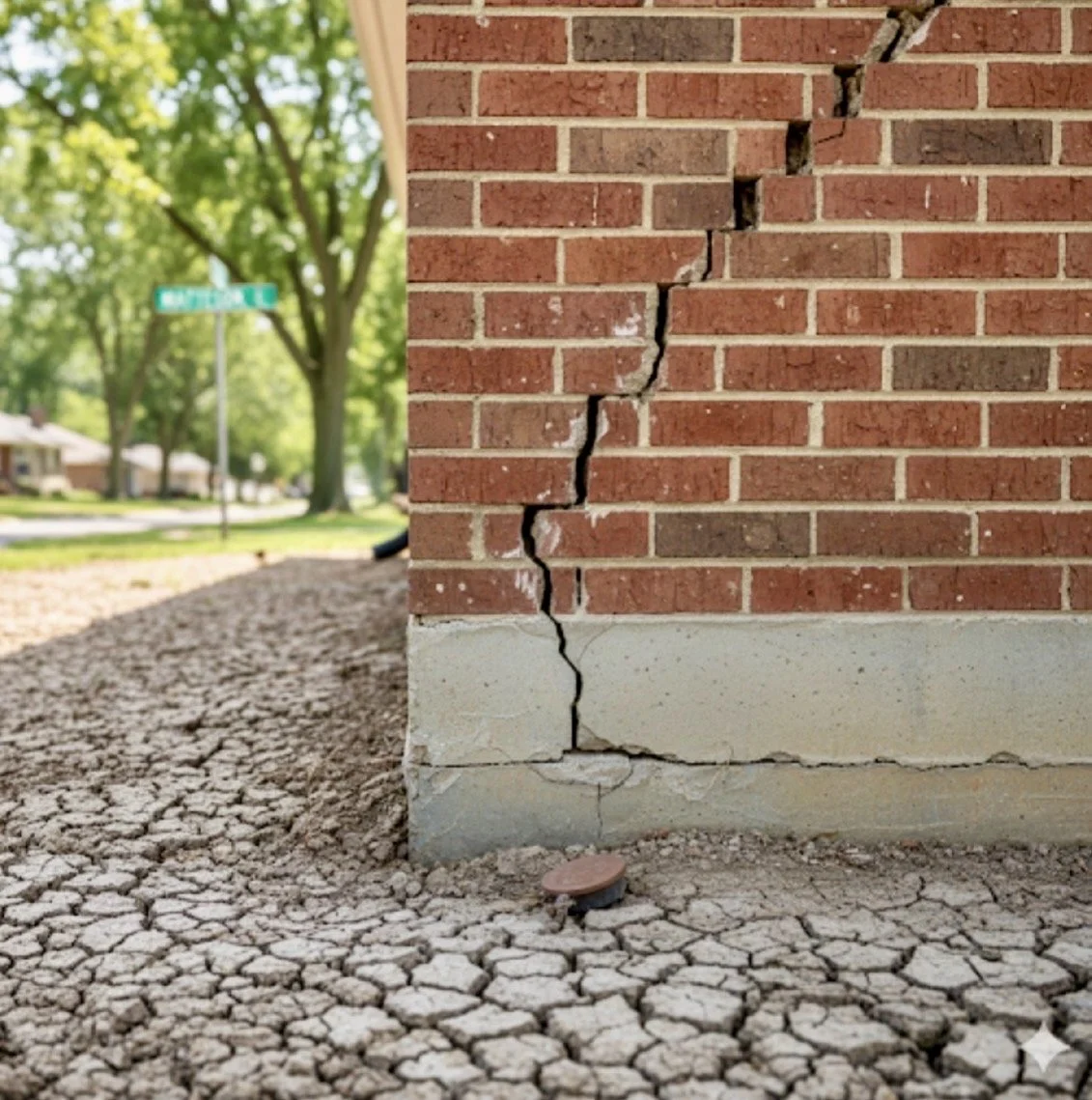
1. Stair-Step Cracks in Masonry: If you have a brick or block foundation, or a brick veneer exterior, cracks that follow the mortar lines in a zig-zag, stair-step pattern are a strong indicator of uneven settlement.
2. Sticking Doors and Windows: When the foundation shifts, it distorts the frame of the house above it. Doors and windows that suddenly don't close, latch, or open smoothly are a classic symptom of foundation movement.

3. Uneven or Sloping Floors: If a ball rolls across your floor or you feel like you are walking downhill, it can signal that a section of the foundation has settled or sunk more than the rest.
4. Horizontal Cracks or Bowing Walls in the Basement: This is often a sign of excessive hydrostatic pressure from saturated, expansive clay soil pushing inward against the foundation walls.
5. Gaps Between Walls and Ceilings: Visible separation where the wall meets the ceiling, particularly on upper levels, can indicate the underlying structure has shifted or settled.
✅ Actionable Tips for Matteson Homeowners
The good news is that much of the stress on your foundation can be managed by controlling the one thing you can influence: water around your home!
Water Management: Your #1 Foundation Defense
• Excellent Drainage is Vital: Ensure the soil around the entire perimeter of your home slopes away from the foundation. The general rule is a 6-inch drop over the first 10 feet. This prevents water from pooling and saturating the clay soil next to your foundation.
• Clean and Functional Gutters: Keep your gutters and downspouts free of debris. Critically, use downspout extensions to move water at least 5 to 10 feet away from the foundation. A blocked gutter can dump hundreds of gallons of water in one spot.
• Manage Soil Moisture: In the Matteson region, we experience both very wet and very dry periods. During long dry spells, the clay soil can shrink and pull away from the foundation. Some homeowners benefit from lightly watering the soil near the foundation during a drought to maintain consistent moisture. The goal is consistency—avoiding both saturation and extreme dryness.
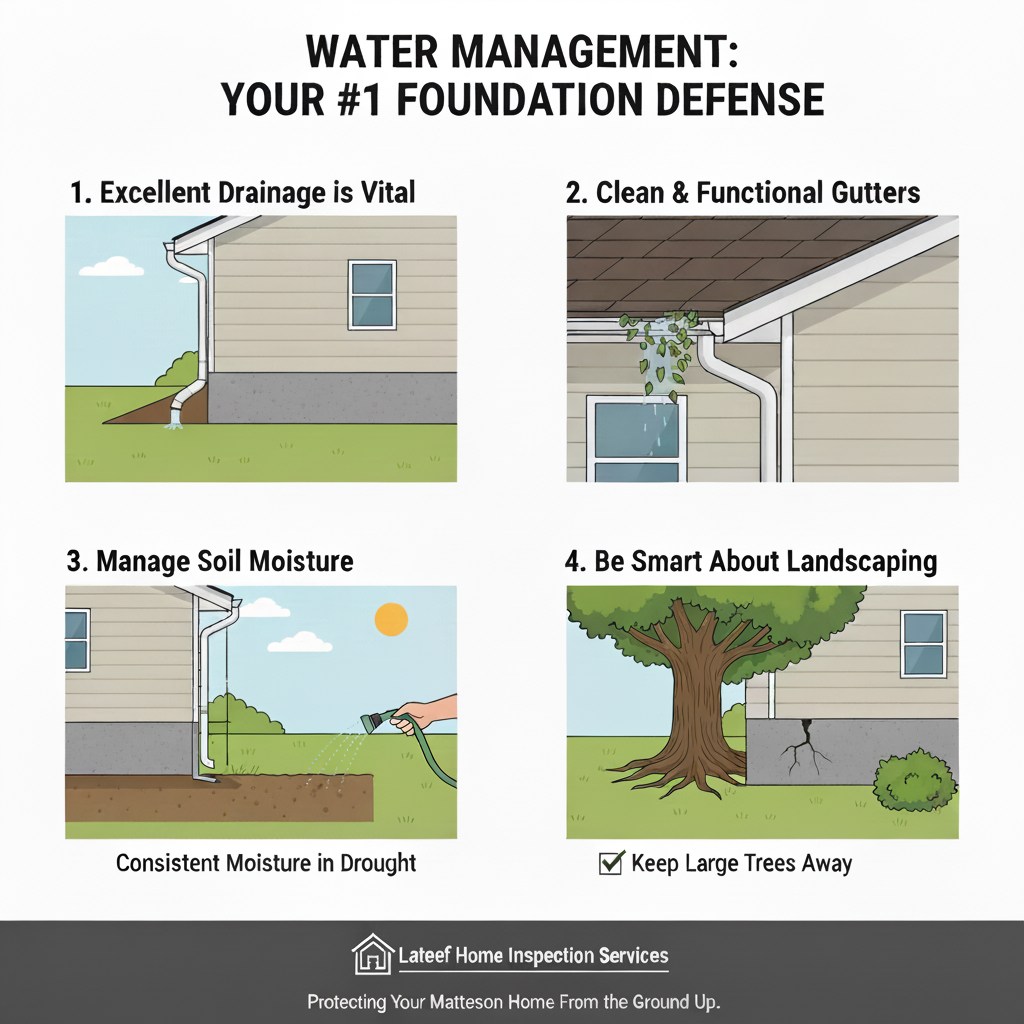
• Be Smart About Landscaping: Large tree roots are notorious for drawing vast amounts of moisture out of the soil, which can lead to localized soil shrinkage and settlement. Keep large trees and extensive root systems trimmed or positioned a safe distance from the foundation.
When to Get a Professional's Eye on the Situation
As a home inspector, we are trained to identify these warning signs and understand the context of the Matteson area's geology.
• The Inspection is Your Peace of Mind: Whether you are buying, selling or maintaining your home, a professional home inspection is the most comprehensive way to assess the structural integrity and the current state of your foundation and overall home. We can distinguish between minor, cosmetic cracks and signs of serious, ongoing structural movement.
• When to Call a Structural Engineer: If we identify cracks wider than 1/4 inch, significant uneven settling, or bowing/buckling walls, we will recommend a specialized inspection by a structural engineer. These professionals can determine the exact cause and prescribe a solution, such as stabilization or underpinning.
📞 Call-to-Action (CTA) Recommendation
A trusted inspection is your best protection against the local "Ground Truth." Don't Guess, Get the Ground Truth! Schedule your comprehensive home inspection with LateefHomeInspectionService.com today to ensure your home is standing strong on solid ground.